Despite a rocky start thanks to area wildlife, I’m excited to begin year 2 of my apple seedling adventures! This post will provide updates on my seedlings from 2025. It will also detail my successful intentional apple pollinations from last year and give a sneak peak at some “elite” seedlings from seeds I’ve purchased.
2025 Seedling Update
In February 2026, I was afraid there would be no seedling update. One morning I woke to find that rabbits had chewed through two separate layers of plastic fencing. Sadly, these rabbits had a feast. All of last year’s grafts were destroyed. The seedlings had been eaten down to the snow cover, and I feared the worst for them. Amazingly, many survived and sent out new growth by May.
Given the amazing variety of intentionally-bred seeds available this spring, I ended up culling all but my favorites. Many of last year’s seedlings came from open pollinated apples. Given their origins (heirloom orchards), they likely would have contributed some genetic diversity to my apple bed. However, given the difficulty protecting young apple trees, as well as space limitations, I dug out most of them to make room for newer seedlings. I believe these newer seedlings have higher potential for delicious apples.
Surviving and remaining 2025 seedlings include:
Bethel OP (from Seed Savers Exchange)
Pink Pearl OP (sent by a friend from Weston’s Orchard)
Rubaiyat x Sunrise
Rubaiyat x ?
Chestnut Crab x Amberwine
Chestnut Crab x Musketeer
and Chestnut Crab x Roxbury Russet (all 2025 Skillcult seeds)
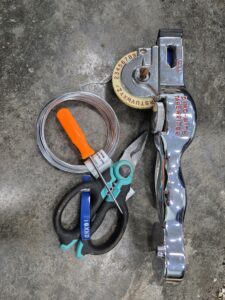
Last year I did not tag my apple seedlings, but instead created a detailed map. Perhaps I am somewhat directionally challenged, as I found using the map complicated. It also was inconvenient to have to bring the map with and count the rows to identify any given seedling. Thus, this year, one of my first tasks, was tagging the plants that survived my culling. Based on the collective wisdom of the Growing Fruit community, I purchased a vintage Dymo-Mite Tapewriter from Ebay (in above photo). As the tapewriter embosses plastic or aluminum strips, there is no ink to fade off. Simply add the name of the tree, poke a hole in the tag with an awl, and add some wire. Viola, easy and long-lasting tags.
My Own Crosses
Last year, I made several of my own crosses using pollen from apple breeder extraordinaire, Skillcult. Despite bugs and apple thieving neighbor children, I managed a decent amount of seeds. In fact, I had so many this spring that I traded some with other apple enthusiasts for scion wood. Successful crosses with McIntosh included Cherry Crush and Pinker Lady. Crosses with Fireside included Cherry Crush, Jellybean Cider, and Pinker Lady. After harvesting seeds from these intentionally pollinated apples, I stratified the seeds in my refrigerator and planted them when they sprouted (see below).
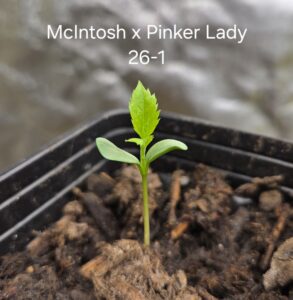
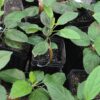
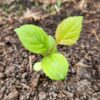
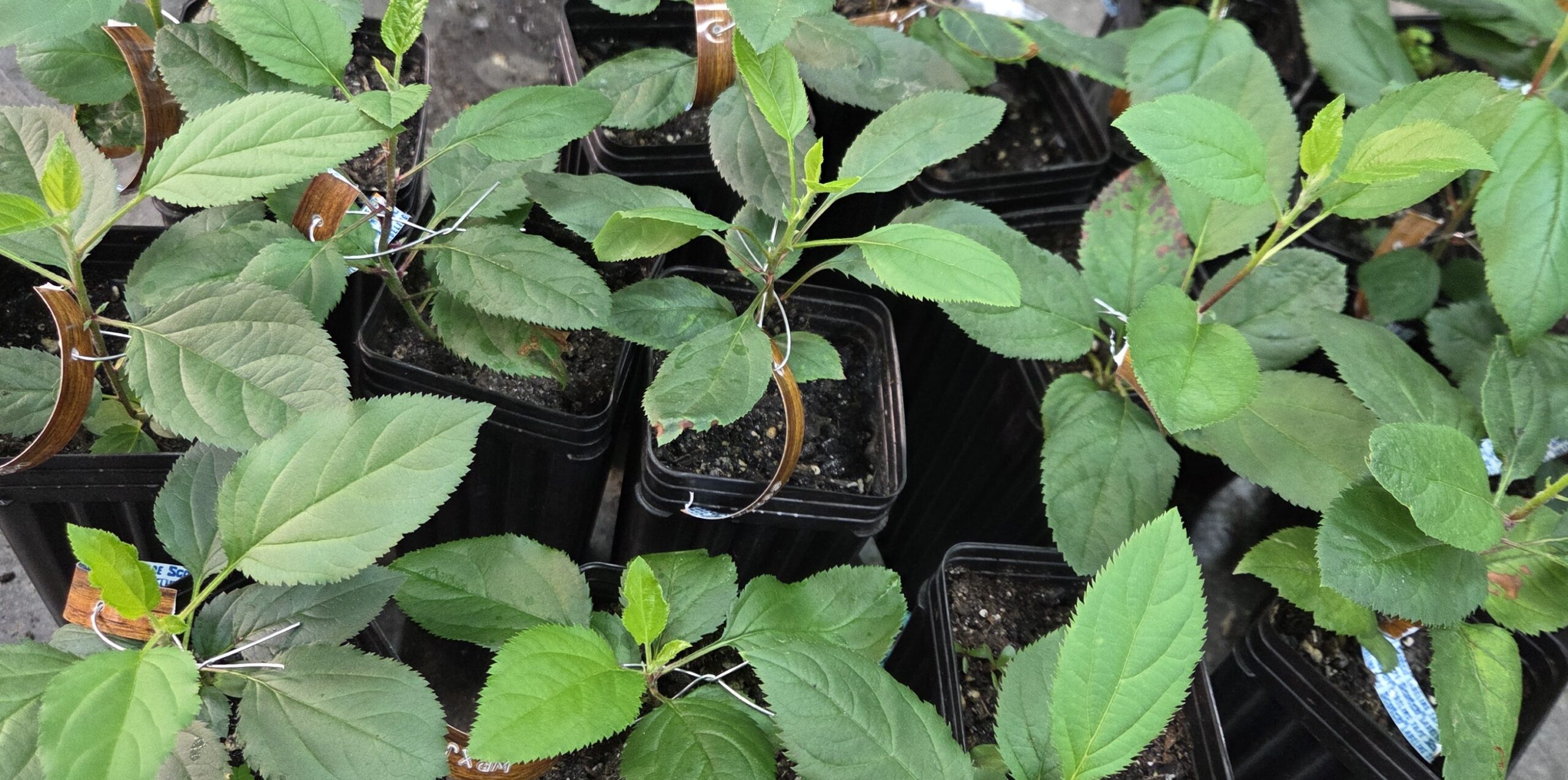
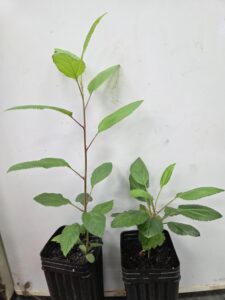
I always find myself a bit in awe of the way that seeds sprout, but it was especially exciting this year to experience this with seeds that I intentionally crossed. Additionally, I continue to be amazed by variability in apple genetics. Below are two seedlings from Fireside apples that sprouted on the same day and have approximately the same number of leaves. The taller one is a cross with Pinker Lady, an incredibly vigorous variety. The smaller one is a cross with Jellybean Cider, a dwarf, somewhat columnar variety. Most Pinker Lady crosses seem to retain the vigor of their pollen parent. On the other hand, most Jellybean Cider crosses appear to retain the dwarfing nature of their pollen parent. (This is also true of the new 2026 Skillcult crosses I obtained). Fascinating!
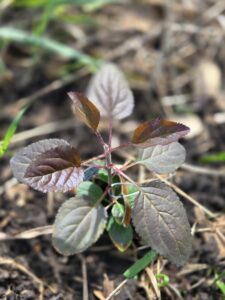
Additionally, apple seedlings show varying levels of green and red coloration. Most crosses with Skillcult pollen have green leaves, and would likely be classified as type I red-fleshed apples. However, despite this, some type I red-fleshed crosses seem to have an above average tendency to display red or purple coloration once planted in full sunlight. Although exciting, I have noticed that mice seem more inclined to nibble the top leaves off the red-leafed seedlings and, so far, have mostly left my fully green ones alone. How strange.
Seeds From Skillcult and Experimental Farm Network
This year I also acquired new “elite” seeds from Skillcult and Experimental Farm Network.
Skillcult’s seed offerings this year included incredible variety. I focused mainly on crosses he made with Jellybean Cider, for its high flavor potential, and on crosses he made between red-fleshed apples and cold-hardy apples. I’m especially excited about Chestnut Crab x Vanilla Pink, Cherry Crush x Sunrise, and Jellybean Cider x Williams Pride.
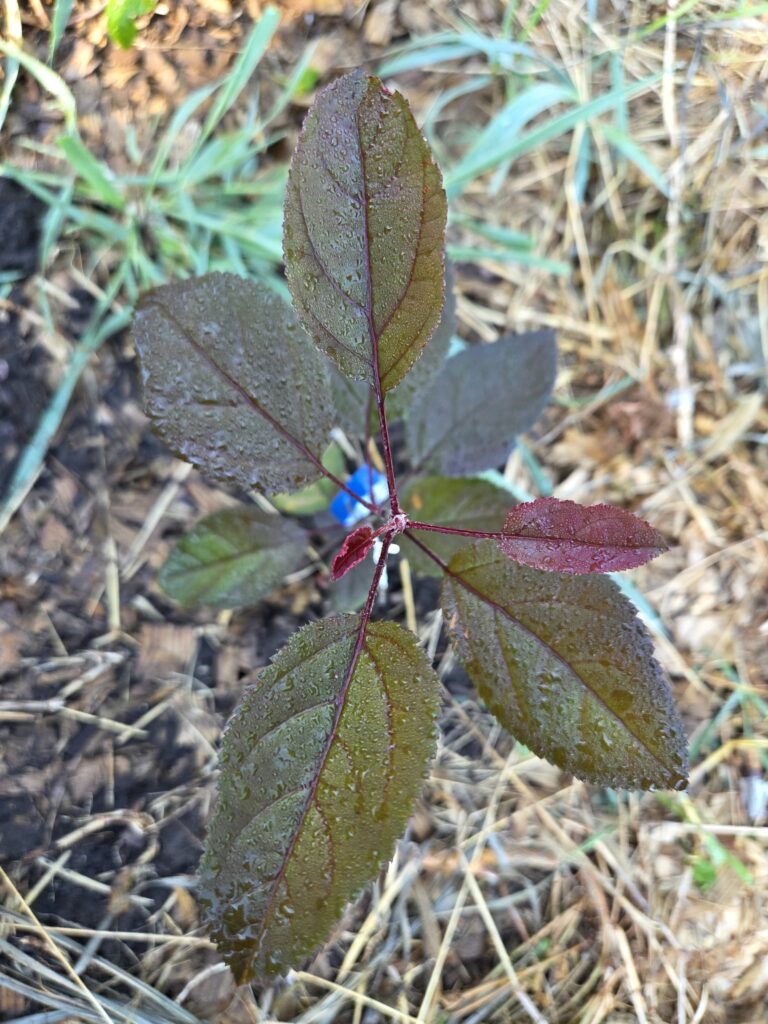
Attempting to add some additional genetic variability to my seedling bed, I purchased seeds from Dr. Amy Miller’s crosses through Experimental Farm Network. Specifically, I chose a packet of Red Fleshed Cider Blend and a packet of Snack Apple Grove Early Harvest seeds. I’m especially interested in the Red Fleshed Cider Blend, given their potential wild niedzwetzkyana or seversii genetics crossed with domestic apples (see above for one of these seedlings). The Snack Apple Grove also seem to have potential, given they were developed in a no spray orchard, and may have good disease resistance.
Final Thoughts
I ended up having too many apples to keep in my original bed, so I had to create an additional seedling garden farther out on my property. Seedlings in both beds have their work cut out for them. Those in the first bed experienced a 90 degree day, then a frost, then hail, and then strong winds all in their first week. Somehow most survived. Those in the second bed were planted on a windy, sunny, 90-degree day, which are conditions under which experts do not suggest planting seedlings. I don’t expect all to survive, but those that do will prove their strength. I look forward to trying their unique apples in 5 to 10 years. Perhaps I will win the apple genetic lottery at least a few times!
Have you planted any Skillcult or EFN apple seeds? I’d love to hear how yours are doing, so feel free to drop a comment below!